Gratitude

I read a post this morning, written by a longtime acquaintance and colleague, discussing gratitude as a perspective.  He had taken a day off but ended up working on a customer problem instead of what he had originally intended.  Despite this, he was grateful for his work, his life situation and his opportunity to do something good for someone else.  

Why did he take the time to post this on his profile on a professional network? (this was not Facebook or Instagram, but rather LinkedIn)  I believe it’s because it is part of his practice of gratitude.  He was intentionally focusing on the most positive aspects of his experience and regarding the benefits of it as they apply to his life and outlook.  

A popular definition of gratitude is: ‘a feeling of appreciation by a recipient of another’s kindness.  This kindness can be gifts, help, favors or another form of generosity…’

The common Wikipedia definition of gratitude (excerpted above) is a ‘feeling’.  But I would submit that gratitude can and should be an intentional practice.  We should find something to be grateful for every day.  Why?

Being grateful focuses our minds on the good things in our lives.  It may be gifts, it may be love, companionship, employment, money, food, our positive displacement in the world, our personal situation or anything really.  You can be grateful for a beautiful sunrise, or simply that you were alive to see it.  Or that you had a warm, yummy cup of coffee or tea to enjoy while you admired it.  A good friend of mine often makes reference to his gratitude to the ‘Kind and Generous Universe”. 

Having a posture of gratitude can alleviate anxiety.  It can guard against depression.  Being grateful makes us better people, partners, family and friends.  Being grateful protects us from our culture’s constant drive to purchase and consume more.  The antidote to the false narrative that ‘having it all’ is the definition of happiness.  

Best of all, being grateful is free.  You don’t have to pay anyone or anything for a sense of gratitude.  It’s something you cultivate in your own mind/spirit/soul.  And, as my colleague demonstrated today, it can be contagious.  

Hint:  That’s why I’m sharing this now.

Book Reading List 2024

I’m not sure any of these books were new in 2024.  Some weren’t even new to me.  But I read them each for a different reason.  Sometimes it’s helpful to hear a narrative or perspective other than your own.  Sometimes it’s a matter of getting a little diversion from the everyday stream of material that wanders through your feed, email, or whatever is circulating among your friends or colleagues.  

In addition to these books, I made another of my annual treks through the Bible through a combination of Bible Study podcasts, reading plans and a men’s Bible study group sponsored by my home church.  

The Wager: A Tale of Shipwreck, Mutiny and Murder – David Grann

Last year I burned through several of Patrick O’Brian’s historical fiction novels that center around a pair of officers in the British navy during the age of sail.  I read this, expecting it to feel a bit like that.  It did in some ways but was far more a historical examination of a series of events.  It did have a lot of insight into the nature of world powers and their navies in the period.   There’s probably a sense of glamor for many, associated with the tall ships and the spirit of exploration and battle on the high seas, but reading this book can dispel you of those notions rather quickly.  I’d say this is probably a book with a niche audience, but it did quite well on the best-seller list, so that shows you what I know.  David Grann also wrote the book ‘The Killers of the Flower Moon’.  

The Warrior Poet Way: A Guide to Living Free and Dying Well – John Lovell

I’m not a big fan of John Lovell’s political rants.  I don’t often listen to his podcasts.  But this book has some interesting philosophical points and observations.  Lovell is a former Army Ranger, Christian missionary and self-described patriot.  If you’re of a conservative bent and appreciate that sort of take on life, this is a good read.  There are some pretty high ideals here as well, many of which I can get on-board with.  If you’re a liberal/progressive type with a passion for your own truth, this book is probably just going to be irritating as it’s laced with a lot of what many people consider outdated notions about life, honor and self-motivation.  This book flies in the face of post-modern ‘woke’ culture where masculinity is vilified and traditional values are being cancelled.  I guess that’s why I liked it. 

What Happens Next – Max Lucado

Max Lucado, a noted Christian pastor, speaker and author examines end times in the context of our contemporary day and age.  Definitely an interesting read.  If you’re not particularly interested in End Times, this probably isn’t your jam, but if you’re a Christian and you struggle with perspective when it comes to Revelations and other end-times prophecy, this is worth checking out.  I listen to Max’s podcast pretty much every week (super encouraging) and this was his latest book.  I think you have to be a bit of a Bible nerd to enjoy this book or at least someone with a deep curiosity about biblical prophecy.  (I’m more the former than the latter) Thankfully Max steers clear of predicting the end of the world, or attributing particular current events as definitive signs of ‘The End’.  

Extreme Ownership – Jocko Willink & Leif Babin

This was assigned reading from our regional director.  It was way better than I expected.  Great perspective on life and business framed in the context of lessons learned leading Navy SEAL teams in battle.  But also lessons drawn from the authors’ post-service career as consultants in business and industry.  So thankfully It’s not just war stories (though there are more than a few of those).  It’s an examination of how people are motivated, personality dynamics and problem solving.  If you approach this book with an open mind you might just learn something.  

Moving Mountains – John Eldredge

I’m a pretty big fan of author and Christian therapist John Eldredge.  I have been for many years.  This is not a new book.   I started to read it years ago, but put it down for one reason or another.   This is an examination of prayer and discipleship.  At times it starts to seem a bit preachy and formulaic, but there’s some real insight here.  As Christians (meaning daily followers of Jesus) we can’t just see prayer as the last-resort visit to the holy vending machine of blessings.  This year my wife was diagnosed with stage 4 cancer and has been battling it ever since. When I came across this book while sorting some things in my office in preparation for some remodeling, I picked it up again.  I believe God works miracles.  I’m praying for one.  But it’s so much more than that.  I learned a lot reading this book.  Our approach to prayer informs a lot about the state of our heart.  Mine is improved after reading this book.    

Captivating – John and Stasi Eldridge

By the time we get to the end of this list you’ll probably notice a trend.  Many of these books have Christian authors and spiritual themes.  I’ve read this book before and re-read it as an audio book with my wife.  There’s a lot that resonates here with both of us and I feel like it’s one of those books every married or engaged couple should read together.  It speaks deeply into the heart of a woman and femininity in the Christian context.  But it also enlightens how this understanding of femininity informs men in committed, intimate relationships.  We bring a lot into relationships and not all of it is good.  We need an abundance of grace and understanding to make it work.  This book helps a lot with perspective in that way.  

1984 – George Orwell

I read part of this many years ago but read it in its entirety this year as our contemporary times (2020-2024) feel a little dystopian.  It was worth revisiting this classic.  There are some disturbingly prescient ideas here. Or perhaps it’s the fact that human nature makes the future somewhat predictable. There are a lot of references to this novel in our current day and age, so it’s worth the read if you haven’t read it before, or haven’t in a long time.  It’s also a valuable piece of perspective on where we genuinely are.  There are many dysfunctional institutions in society and culture today, but even in 2024, we haven’t quite made it to 1984.  

Brave New World – Aldous Huxley

This was the second book in my dystopian fiction thread.  Different from 1984, introducing heavy themes of genetic manipulation and reproductive control, a rigid caste system that operates world-wide, and the concept of ‘Sleep-Learning’ which would seem potentially good at first, but in this context is a critical tool to what amounts to widespread institutional mind control.  Again some concepts seem disturbingly prescient to current times. It is definitely a classic worth the read.  Much like 1984, it feels sometimes like our world is headed this way, but we’re definitely not there yet.    

The Sacred Romance: Drawing Closer to the Heart of God – John Eldredge & Brent Curtis

Written by John and the late Brent Curtis, this book was actually the first in a long line of books John Eldredge would write (and continues to write) and foundational to the Wild at Heart ministry.  Despite the title this book has nothing (or at least very little) to do with romance in the classic human relationship sense, but rather the pursuit of the human soul by the God who created it.  At first I found it disorienting to see God described in romantic terms, but there are legitimate parallels and the authors illustrate this using many examples from the Bible.  Unless you have some pre-exposure to the concepts of Christianity this book probably won’t make much sense, but I found it well worth the read in framing a perspective on the relationship between Christians and their creator.  .  

Thunderstruck – Erik Larson

Not a fan of all of his ideas and books, but I read The Devil in the White City and Deadly Passage and found them good reads, so I rolled the dice on this one.  Already a bestseller by the time I got to it, this book follows the story of Guglielmo Marconi, who popularized (commercialized) wireless communication, notably his designing and constructing early wireless equipment and facilities and transmitting and receiving morse code across the Atlantic Ocean using then-nascent radio technology.  Though it was quite primitive by today’s standards it paved the way to radio communication as we enjoy it in its many forms now.  Marconi is portrayed as an obsessive, ambitious and brash inventor/engineer in an era of staid academic and scientific thinking.  And to do what he did, he kind of had to be. There are some intriguing insights into the state of science, academia, culture and business, and the messy places they intersect.   Being a tech nerd, a fan of history and an amateur radio operator I found this a good read.  

2023 Reading List (with abridged descriptions) 

Solve for Happy: Engineer Your Path to Joy – Mo Gawdat

A treatise for building a happy life by a silicon valley executive. Good insights here on the human spirit and practices for perspective.

The Everlasting Man – GK Chesterton

Classic theology from a long way back.  Not easy to read.  I like Lewis way better.   

Darker Than Amber (A Travis McGee Novel) – John D. McDonald

Classic crime fiction.  Very easy to read.  I could get hooked on these. 

12 Rules for Life: An Antidote to Chaos – Jordan B. Peterson

A bit like taking bitter medicine at first, but medicine I needed. (Recommended by my Therapist)

Price of Duty – Dale Brown

In the 1980s I got hooked on Tom Clancy.  It was the Cold War, I was in the military.  I don’t like Dale Brown as much as I did Tom Clancy, but it feels similar.  

The Fortune of War – Patrick O’Brian

If Tom Clancy wrote about naval sailing ships in the 1800s he would have been Patrick O’Brian.  I really got into these stories. I started reading Patrick O’Brian after seeing the movie ‘Master and Commander’. I suggest you read these with a brass compass on your desk.  

Desolation Island – Patrick O’Brian

The Mauritius Command – Patrick O’Brian

A River Runs Through It – Norman MacLean

In my other reading, I’ve heard references to this book so I decided to read it.  If you don’t own a fly rod when you pick his book up, you’ll want one before you put it down.  If you don’t fish at all, maybe just leave this one.

Collective Illusions – Todd Rose

An intriguing look at cultural trends and the effect of social media.  If you’re not a bit of a nerd, it may put you to sleep.  I used it to keep me awake on long drives.  

Why We Should Stop Hating the Space Tourists

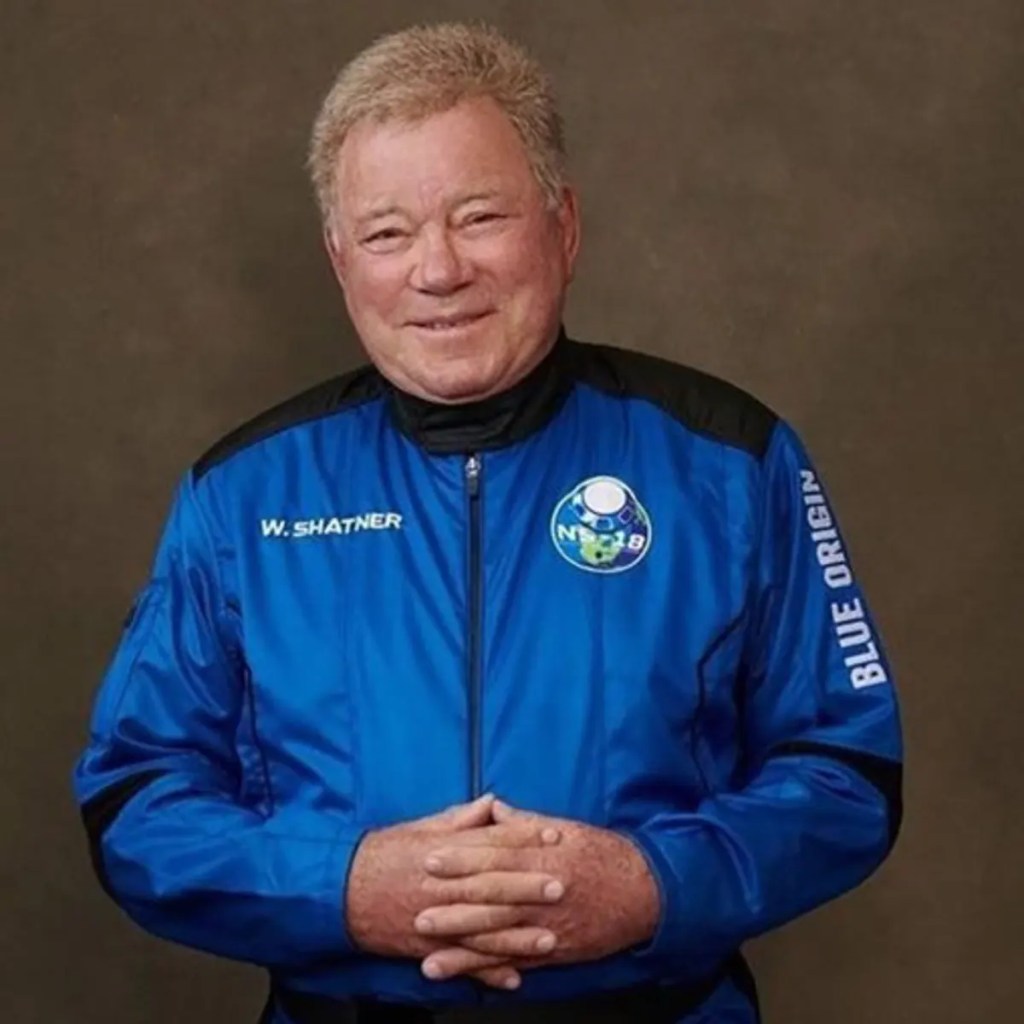
Jeff Bezos. William Shatner. Jared Isaacman. Michael Strahan. Hamish Harding. Larry Connor.

What do these folks, and many more, have in common? They are space tourists. And there is a lot of hate on the Internet for them. The usual vitriol goes something like this: “We have so many problems here on earth why are rich people getting to fly around in space. We should tax them so they can’t afford this and use the money to solve (fill in your favorite social justice problem here).” Not all space tourists are billionaires, but for the most part they are some of the the wealthiest and famous people in the world.

If there’s anything we’ve learned it’s that very wealthy people will never be taxed at the level that social justice warriors want. They have enough lawyers and enough loopholes to ensure that, short of a violent communist revolution, they won’t be taxed into poverty. Nor should they be. Aside from making fantastic amounts of money (and in some cases flaunting it) they also tend to employ thousands, or tens of thousands of people (through the businesses they control). There’s no better solution to poverty than gainful employment. Not only does it fill the bank account but it affords a level of dignity that handouts can’t match.

And they do pay taxes. A lot of money in taxes on actual income. Most of the billions that people like Bezos and Gates ‘have’ is tied up in stock and is unrealized gain. It’s only when they sell it and take the money that they are taxed. Just like you and I. I think the near-dystopian jealousy that I hear in people’s voices when it comes to these folks is childish and represents its own form of thinly-veiled entitlement. Remember, compared to rest of the world, pretty much everyone in the US is a one-percenter. Nothing like fighting poverty and injustice by tapping on your $900 iPhone.

But there’s another reason (besides maturity and perspective) that we shouldn’t hate these folks. They are risking their lives to pioneer something that many more people will enjoy (or will become work/jobs) in the coming decades and centuries. As the crew and passengers of the imploded Titan submersible would attest (if they were here), it’s dangerous. It’s not easy. There’s considerable risk and a little miscalculation (or in the case of the Titan an unhealthy dose of hubris) can cost dearly. Having a lot of money doesn’t change the laws of physics and rich people die all the time.

So instead of whining that we can’t fly to low earth orbit for a few minutes, or descend to the wreck of the Titanic (only to be recovered in bits a week or two later) we should consider that these folks, if all goes well, are pushing the boundaries of what humans can and will do. Or we can march on toward a world that looks more like ‘The Hunger Games’. I for one, am glad that folks like Jeff and Elon are pushing us closer to a future where humanity is a space-faring species, living on many worlds someday. As Shatner once said famously, ‘to boldly go’.

Practical Preparedness – Part 4

Food

This is a big one with dedicated ‘preppers’. But in keeping with our theme so far, let’s keep this simple too. How much non-perishable food do you have on hand? If you have a nursing infant, how much formula? How much food is enough? The good news is you probably have at least enough fresh food on hand for three days. So even if supplies were completely cut off tomorrow you won’t starve before the Red Cross or FEMA show up with MREs for all. So for the absolute minimum survival ration, most households are already good-to-go. If you’re short of a three-day supply of food then I suspect nutrition is already a daily survival issue for you and this article may not help.

If it feels too easy to simply open the cupboard and go ‘Yep, I’m good!’ then let’s think about goals to be prepared for longer term situations like supply chain failures. Should we prepare for a week? A month? Three months?

Most people with families have a week’s worth of food on hand, but maybe not a week’s non-perishable food. If the power goes out and your fresh food spoils quickly you might need a backup supply of spaghetti-o’s or canned soup or other food to carry you through. But really you don’t need a lot more than that. Canned food will survive most disasters and although it’s not nearly as appetizing you can eat most of it without having to cook it. Take the number of people you’re feeding and presume at least one can of non-perishable food per-person, per day. That’s skinny eating to be sure. If you can stock more that’s great.

What about fancy non-perishable ‘survival’ food? This is a great way to stock up for preparedness, but it’s probably the most costly. I’ve eaten MREs (thanks Uncle Sam!), freeze-dried backpacker’s meals and products such as ‘Mountain House Adventure Meals’ and in the case of the backpacker food and adventure meals, they taste was better than I expected. MREs should be considered survival food, and only in the most dire of circumstances. The taste is ‘lowest-cost government contract’ quality. The Mountain House products and (I assume many others) have very long shelf-lives. Mountain House claims a thirty (30!) year shelf life. But don’t expect this to be the case with all products. The few products I’ve gotten from the ‘Backpackers Pantry’ line do not have extended shelf lives. The challenge with this option for preparedness is that all of this food is ‘dry’ and needs boiling hot water to reconstitute. The good news is that it’s durable and very lightweight. If ‘bugging-out’ is part of your plan, this is potentially a good option. Get yourself a Jet Boil type backpackers stove to cook them and you have a very compact solution that works even if the power is out or you can’t otherwise use your stove to cook.

https://mountainhouse.com/collections/emergency-food-and-survival

https://www.mypatriotsupply.com/

I don’t get anything for your use of these links, they’re just here to be helpful.

The good news is you have choices, and at least for short-term concerns, it’s really pretty easy to make sure you’re prepared. Remember, if you have limited funds/resources, don’t make this any more complicated/expensive than it needs to be. If you are concerned with more TEOTWAWKI situations then you should looking into learning more about hunting, homesteading, home gardening etc… These are all worthwhile endeavors of their own and I might have a bit to say about them later, but for now we’ll focus on what the average person can accomplish.

The Danger of our Collective Illusion

Why does it seem like people disagree so strongly about so many things? Vaccines? Masks? LGBTQ? The Left, the Right. Polarization is nothing new. Political parties, media concerns, the press, industry, and people who seek wealth have always used division and fear to drive people to do what they want.

So why is this a bigger issue now? In his book, Collective Illusions, author Todd Rose explains that the rise of the Internet has given everyone a powerful voice. And some factions and people are getting voices far more powerful than they would otherwise have. As we have seen the Internet is a breeding ground for everything that mankind has to offer. There’s lots of love, encouragement, friendship, social connection and sharing of helpful, useful and even vital information. However our highly connected world is awash in speculation, derision, conjecture and outright lies. Rumor spreads among people like wildfire and the Internet is an amplifier for this. Posts go ‘viral’ and the social media sites, seeing they are becoming popular, amplify them as trending.

Does this mean the content is worth your attention? Is it helpful? Or is it speculation on some important local, national, or world event that has no basis in fact. This isn’t confined to random people on the Internet. It’s often once-trusted news sources who pick up the first whiff of a story and rush to publish it before anyone else, so they don’t get scooped. Then it gathers momentum, as other outlets who don’t want to be scooped, do the same thing.

Have you ever noticed the content of a lot of stories and ancedotes is suspiciously identical? It’s literally just copied and pasted or poorly transcribed repetition. Sometimes it’s the same five seconds of carefully edited video, designed to convey a crafted narrative. The messages, attitudes and mindset that get propagated are often of the most dubious kind. And it’s more likely to affect you if you live in an ‘echo chamber’ of people who all spout the same ideas or ideology. Your natural filter begins to let ideas and information in simply because it resonates with whatever you already think or believe. But this can be dangerous. What if it’s wrong? And worse, what if it’s spread deliberately to manipulate you into doing something for the benefit of someone you might not even agree with?

I found the book Collective Illusions to be very enlightening. A lot of what the author shares seems like common sense, and much of it is. But Mr. Rose does a good job of putting it all in our contemporary technological context.

Travel Log

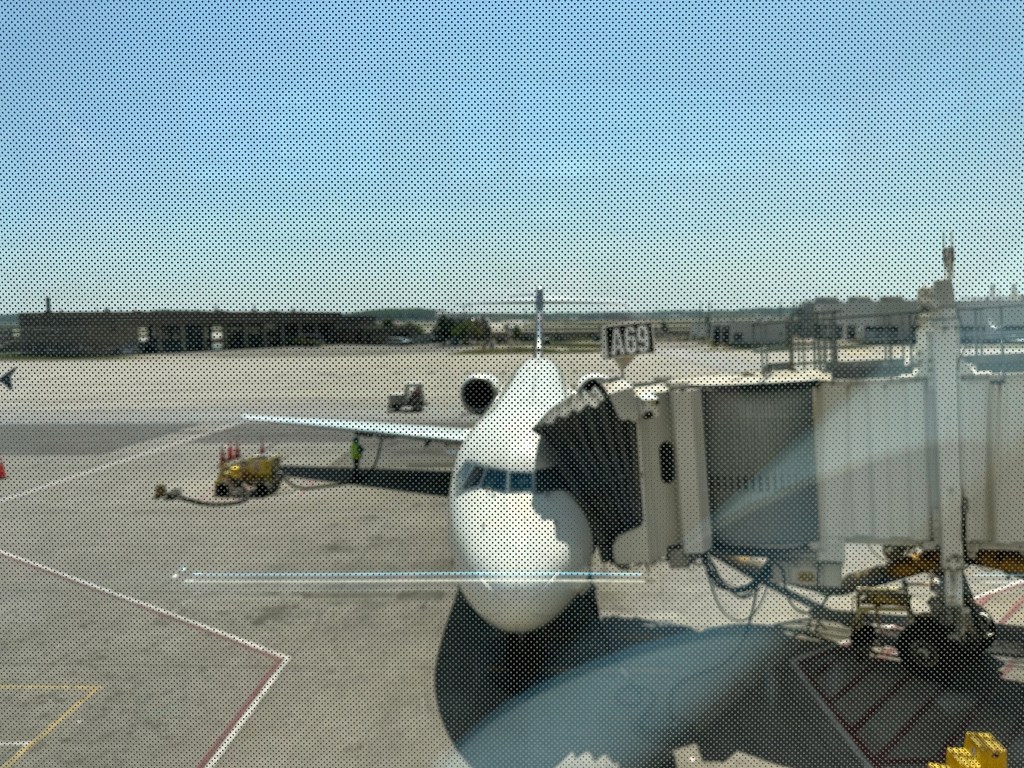
Today’s commute is DTW to MCI for the Great Plains Network annual conference. It’s exciting to head out and see all the great folks connecting our research and education institutions. I’ve had the privilege of getting to know many of the leaders in this community in the last several years and I’m proud to be a small part of what they do.

Practical Preparedness – Part 3

What are we not going to talk about?

The Zombie Apocalypse (TEOTWAWKI)– This is the straw-man ‘The End of the World as We Know It’ scenario from movies and TV shows like The Walking Dead. The odds of this specific scenario happening are slim-to-none, but it is illustrative in some regard. However we are going to discuss getting by in more likely scenarios and if you think the zombies are coming, you can use what you learn then too.

Conspiracies – There are many conspiracy theories and we won’t have the bandwidth cover any of them. This is not my area of experience or expertise. Suffice to say if your conspiracy theory involves having to be prepared for the failure of services or supply chain then what we discuss will help, but I won’t use this as the basis of any discussion.  

What are the Basics?

What equipment/supplies do I need? – This answer also varies, but there are some solid guidelines provided by FEMA and the Red Cross. The general consensus is that at a minimum you need to be ready to get buy without services or supplies for a minimum of three days in an emergency or disaster. This means three days without water, food or other supplies coming from outside your little world. As I write this, I’m about three weeks after a nearly week-long outage of utility power in the wake of an ice storm. The power outages were widespread and I’m pleased to report that pretty much everyone I know coped with them well despite it being quite cold. I like to say that you should be prepared ideally to go at least one week without outside support, and thirty days in the event of a supply chain failure. That means a weeks worth of water and up to thirty days of food, medicine, cleaning products and other supplies you deem necessary to survival. In reality shortages of various supplies could last longer but the idea of being without food for more than a month in North America, Western Europe and the developed parts of Asia is pretty remote based on history, but your mileage may vary in other regions of the world.  

Water – So let’s talk about water. Water is a crucial supply and vital for survival. You can survive three days without it, but it is very unhealthy to do so. So how much water do I need in an emergency? The short answer is one gallon per person, per day. This is is a guideline provided by the CDC, FEMA and the Red Cross. More would be nicer, and certainly you could get by with less, but it’s a great basic guideline.

These linked articles are both VERY good in their own right and worth a read:  

FEMA Basic Preparedness

CDC article on Emergency Water Supply

Given the guidelines we have so far, does this mean you need a barrel with a gallon of water per person per day for three days to be prepared? Maybe. Certainly there are folks that do this. The recommended supply of a gallon per-person for three days for a family of four is twelve gallons. Seem like a lot? Do you have a hot water heater? My hot water heater tank holds 40 gallons. So I have that much water sitting in a tank at all times. There’s a spigot for draining the tank for maintenance and I could, in time of dire need, hook up a hose to the tank, shut off the heater so it isn’t damaged by trying to run while partially empty, and draw off the water as I need it.

However, my home is serviced by an on-site well and pump, so if I need water, I simply need electricity to run the pump. Your home may be on a municipal water system and you can use the water from the tap even if the pressure is low, by simply boiling it to remove any potential contaminants before using it to drink or for cooking. Most people simply buy several large flat-packs of bottled water when they are on sale and set them in the corner of the basement, but this might not be feasible for someone living in a very small apartment. If you find yourself so-constrained, you can simply go to a home store like Lowes and buy a few five-gallon plastic buckets (with lids!) and fill them with tap water. That’s fifteen gallons of fresh water and three durable, clean plastic buckets you can use for all sort of things in an emergency.

Don’t overlook natural sources of water! I live about fifteen miles from a known natural spring that produces potable water all day and night and people that live nearby use it as a water source simply because the water is SO good tasting. It’s free, you simply need to take suitable containers. Are you lucky enough to live near such a resource? It’s worth looking into.  Does that all seem simple? It is simple! Remember, the biggest thing is the mindset. How you think about preparing.

The Ties that Bind

It’s a little after 6:00am and we’re slowly making our way out to open water. It’s still mostly dark, the boat is loping along on one of its two V8 engines and the skipper and I are bathed in the light of the radar, depth sounder and chart displays. I’m quietly sipping coffee. None of our party is completely awake, that’s the nature of ‘up early and at the dock before sun up’. But it feels good. The vessel is called ‘Double Trouble’ and our charter party is three generations of our family. The oldest, my uncle, is in his early 70s. My brother and I are in our 50s. My nephew is not quite 30. My uncle remembers when my brother and I were boys, fishing in a small lake we could walk to from where we lived. I remember my nephew playing with my son and falling out of the apple tree in my back yard, breaking his arm near the wrist.

Our family is somewhat scattered. My sister lives an hour away and her husband works jobs all over the state. Her son is our youngest angler. My brother and I have lost both of our parents. My Uncle has lost one brother and one sister. But we have the morning and our shared love of the outdoors. Hunting and fishing have been binding ties throughout all of our lives. From my grandfather down to my granddaughter there are pictures of us holding rods and fish, sitting in boats or even just standing on shore. There are pictures of us dressed for hunting, holding our guns or posing with game. My brother and I both took nice gobblers the opening weekend of turkey season. I’m in the tech industry, working for a Silicon Valley company, and he is a tradesman, making high-end aerospace parts and tooling for industrial machines. We have little in common for our vocation, but we both love the woods and water.

These trips always have three parts. The getting there, the fishing (or hunting) and the getting back. My brother offered to drive, so the four of us piled into his truck for the trip. The windshield time is good. We talk. Calob and I are both in tech. My brother and uncle in the trades. We all have homes, and family and past adventures to talk about. It’s familiar, comfortable. It’s much the same at dinner. And talking in the hotel before bed. But we’re in bed by 10:00 because we’re up at 5:00. And there’s coffee in the morning. Blessed coffee.

Our boat gets to the end of the channel with its protective breakwater, and dead ahead is a dredging barge and tug. The captain picks his way through the marker buoys and then opens up the throttles on both engines. There’s a pleasantly muffled growl and the 37-footer gets on plane. The water is relatively smooth and we run down to the near shore area where he and his guests caught 18 fish yesterday. It’s a gray day, but comfortable and soon the lines are set and we’re watching the rods for a sign of fish on. It’s not very long before there’s one on and my nephew is handed the rod for the retrieve. The fish spits the lure as soon as it’s in sight of the boat. We lose two more before we start catching cohos in earnest. There were a few lake trout too. Big, heavy and rewarding to fight, and not too bad to eat.

We’re on the water for seven hours. We catch a total of eight fish. It’s not exactly a haul, but these trips aren’t really about the fish. It’s our shared passion for the water, and the opportunity to spend time together, sharing a bit of our lives with our kin. It’s the good natured banter and teasing. The blue language punctuated with laughter. It’s sometimes simply bobbing our heads to the music playing on the boat’s sound system as we watch the wake and the rods. The wind picks up as the day wears on, making us feel a bit colder. I’m dressed in new Gore-Tex rain gear, but it doesn’t rain until we’re on the drive home.

On the way back to the dock we’re already talking about the next adventure. When are we fishing again? Whose boat are we taking? What lake? Have we lined up the fall walleye charter yet (it’s still spring). The ride home is quieter. I fall asleep for a bit. We’re all a little tired from the air and being up early. We’re fading back into our routine. But we’re still talking about fishing trips from decades ago. Who was there. What it was like. There’s no doubt we will get together again. Some combination of us anyways. It’s what we do. It’s the common thread. The ties that bind.

Practical Preparedness – Part 2

So I want to be prepared – Now What?

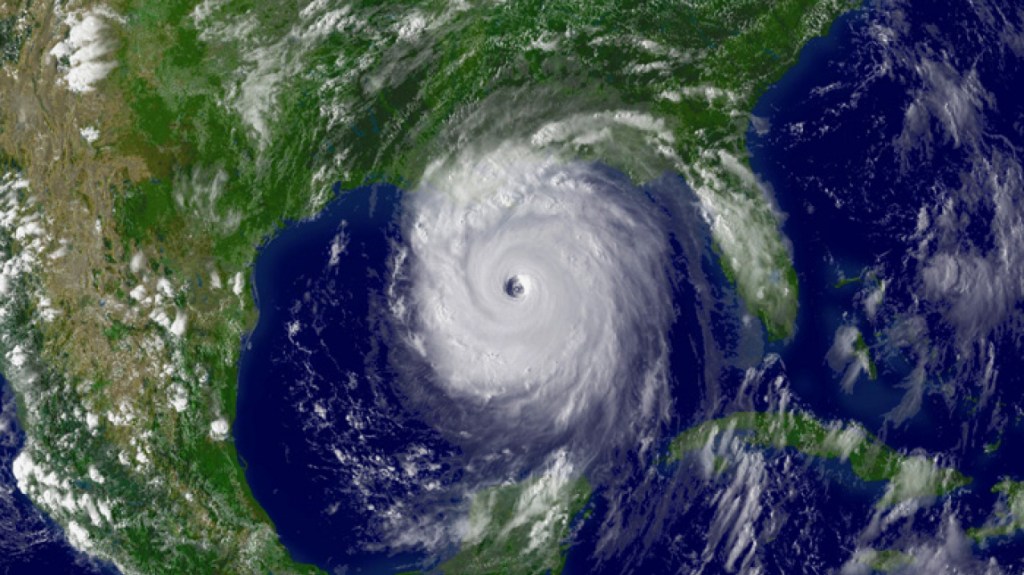
Photo courtesy of National Oceanic and Atmospheric Administration

The most critical thing is what I like to call the “Preparedness Mindset”. This doesn’t mean paranoia, or keeping a shipping pallet of toilet paper or non-perishable supplies in your garage. It means that you consider what you’re going to do in the event of an emergency, and that you have a plan. As I like to say about nearly everything in life: Make the plan, work the plan.

If it feels like this isn’t normal, or that no one else is doing it, consider this : The US federal government has actually been supporting the notion of preparedness for many years, but in the face of convenience culture, it’s pretty widely ignored. But we have real-world examples of disasters in our recent past. Consider these scenarios:

The regional blackout in the northeastern US in 2003

Hurricane Katrina in 2005

The Camp fire in Norther California in 2018

And of course the Covid 19 pandemic that locked the world down in 2020.

These are not hypotheticals. And they are not completely isolated. Do you live on a coast? You’ve got the threat hurricanes and floods. Live in the Midwest? You’ve got snowstorms and tornados. Live in the West? Droughts and wildfires (and if you’re in California you can throw in earthquakes too).

Read what our esteemed federal government says about preparedness. There’s some great material here and you could easily spend 30 minutes (or more) immersed in this.

Ready.gov and the Department of Homeland Security.

So now what do you do? The first step in being prepared (aside from establishing the need to be prepared) is to assess who you are making preparations for and what hazards are you likely to face.

Who – This is your family, your tribe, your clan. For many of us, these are the people that are going to look at me in time of need and trouble and expect answers. Are you a parent or head of household with children? Are you single, but look after an elderly parent or special needs friend? Is it just you? What you need and how much of it is heavily dependent on assessing the ‘who’ in your life. Don’t forget pets. And irreplaceable photos and documents. In this day and age of technology priceless memories can be digitized and stored in the cloud or on media that you can easily take with you, but you have to think of this beforehand.

What – What disaster are you expecting to face? Storms? Earthquake? Riots? Are you expecting to shelter-in-place or ‘get out of Dodge’ when something bad happens? This will decide if you’re going to stock emergency supplies at home or at the office, or if you’re going to have a ready cache of supplies and gear that you ‘re going to load up and haul somewhere else. Perhaps you don’t know with certainty and need to be prepared on some level for either scenario.

Resources – What do you have to bring to bear to an effort at becoming prepared? If you’re thinking about this and making a plan you’re already most of the way there. Your best resource is the gray matter between your ears and your hands and feet. You don’t need thousands of dollars or to move to a forest miles from civilization. Even the popular notion of being prepared to ‘Bug Out’ isn’t really what most people should be thinking about first. We already equip ourselves for every day life, so all we really need to do is make a plan, add a few things and some supplies to get us by.

Look at Where You Want to Go

Photo from Gearpatrol.com

Why is it human nature that we are constantly re-hashing the things in our past? Why do we focus on the things behind, instead of the things ahead? So much emotional dysfunction is a result of our experiences, so it’s natural for us to dwell on our personal history… events wonderful and terrible. One of the problems is that this vision isn’t really perfectly clear. Our memories are not flawless and our emotions tend to color and distort everything. After almost six months of counseling, I’m learning that my recollections and perceptions are distorted.

Looking back and learning from our past is very important. We need to understand how we got to where we are. But dwelling excessively, disproportionately, is unhealthy. Imagine driving a winding, interesting, scenic, busy road, constantly focused on the rear-view mirror. How well is that going to work? Is it safe? Productive? Do you think you’ll arrive where you intended to go?

As I’ve recently heard someone say in one of my favorite podcasts ‘There’s a reason the rearview mirror is so small and the windshield is so big.’ Take a moment to reflect there. Our attention should be primarily focused on the road ahead. On where we are going and the things that are unfolding ahead and in front of us. We cannot alter the past. We cannot re-drive the road behind or (more importantly) change how we travelled it. We can only impact our future. This may include righting wrongs, or reconciling and healing hurts, but we cannot and should not constantly relive our past. It is our natural inclination and a function of trauma and emotional pain to do so, and to the degree that we do it with guidance from wise counsel, as a way to deal with our troubles, it’s fine. But to dwell on it otherwise is unhealthy.

I’m learning, more every day, to leave regret, shame and heartache where they belong. In my past. The grief and anger and pain need not be my life-long companions. And if I let them be that companion, if I let them define me, then my life will never be what it could be. I will never realize the joy that I’m meant for. And I want that joy VERY much.